

Affiliate marketing is a powerful tool in the digital age, allowing individuals and companies to earn income by promoting other businesses’ products or services. In this pursuit, the right set of tools can make a significant difference. They can streamline your tasks, grow your audience, and ultimately boost your affiliate earnings. Fortunately, there are a variety of free tools at your disposal that can help you manage and optimize your affiliate marketing efforts effectively.
Gone are the days when you had to rely solely on paid solutions to track your progress and enhance your campaigns. Now, we can leverage free and accessible tools that handle everything from email marketing to analytics and optimization. These tools not only help us understand our audience better but also provide insights into what strategies work best. Utilizing them correctly, we can increase the efficiency of our work without incurring additional costs, all while maintaining a strong and profitable online presence.
Key Takeaways
- Free tools can significantly enhance affiliate marketing efforts.
- Analytics and optimization lead to better strategy decisions.
- Productivity and campaign effectiveness can be improved at no extra cost.
Understanding Affiliate Marketing
To thrive in affiliate marketing, it’s essential to grasp both the core principles and the variety of programs available.
Fundamentals of Affiliate Marketing
Affiliate marketing is a performance-based marketing approach. We earn commissions by promoting other people’s or company’s products. It works through a simple cycle: we choose a product we like, promote it to others, and earn a piece of the profit for each sale made through our unique affiliate link.
Key Components:
- Product: What we’re promoting.
- Affiliate Marketer: That’s us, promoting the product.
- Consumer: The end user who buys the product.
Process:
- Join an Affiliate Program: We sign up for a program that offers products we’re interested in.
- Promote: We use our channels, like blogs or social media, to share the products.
- Track: Our unique affiliate links help us track sales.
- Earn: We get a commission for the sales made through our links.
Key Considerations:
- Transparency: We must be upfront with our audience about our affiliate partnerships.
- Relevance: Promote products that are relevant to our audience.
- Value: Provide genuine value to consumers, not just promotional content.
Different Affiliate Programs and Networks
An affiliate program is a deal we enter with a company, agreeing to promote their products in exchange for a commission. Affiliate networks, on the other hand, are platforms housing multiple affiliate programs across various industries.
Examples of Affiliate Programs and Networks:
- Amazon Affiliates: This broad-ranging program allows us to promote millions of products.
- ClickFunnels: They offer a program focused on their sales funnel products.
- ShareASale and CJ (formerly Commission Junction): These are networks with a wide selection of companies to partner with.
Choosing the Right Program:
- Consider the commission structure and payout terms.
- Look for reliability and reputation of the program or network.
- Ensure product relevance to our niche and audience.
By aligning with the right programs and networks, we can maximize our affiliate marketing efforts and maintain a stable source of income.
Essential Affiliate Marketing Tools
In affiliate marketing, success hinges on visibility and efficiency. We use a variety of tools to optimize our content for search engines, create engaging material, and track our advertising efforts to ensure maximum performance.
Keyword Research and SEO Optimization
For us to rank our affiliate sites higher and drive targeted traffic, keyword research and SEO optimization are essential steps. Free tools like Google Keyword Planner give us insight into the search terms our audience is using. Additionally, tools like Moz’s Free SEO Tools help us to further fine-tune our website’s on-page SEO, ensuring that we comply with best practices and that our content reaches its intended audience effectively.
- Keyword Tracking: We monitor our ranking for targeted keywords.
- On-page SEO: We ensure proper use of meta tags, headings, and keyword density.
Content Creation and Management
Creating compelling content is key to our affiliate marketing strategy. Free content creation tools such as Canva allow us to design visually appealing graphics, while WordPress assists us in managing and publishing our content effectively. These tools streamline our workflow and help maintain a consistent posting schedule, which is crucial for audience retention and SEO.
- Blog Posts & Articles: We craft informative and engaging text.
- Media Elements: We add relevant images and videos to enhance our articles.
Ad Tracking and Performance Tracking
We keep a close eye on our affiliate campaigns with ad tracking and performance tracking tools. Using platforms like Google Analytics, we analyze the traffic and behavior of our visitors. This provides us with valuable data that we can use to optimize our advertising strategies and, ultimately, improve our conversion rates.
- Traffic Analysis: We observe visitor sources, pageviews, and user engagement.
- Conversion Tracking: We identify which ads are leading to sales and adjust accordingly.
Free Tools for Effective Email Marketing

Email marketing remains a cornerstone of digital marketing, and utilizing the right tools can make managing campaigns and subscriber lists a breeze. Free tools are available that cater to these critical tasks, providing features once exclusive to premium services.
Building and Managing Subscriber Lists
Building a subscriber list is the first step in a successful email marketing campaign. We recommend Mailchimp, a renowned tool that offers a free tier allowing us to create and manage our subscriber lists effectively. Mailchimp’s free plan provides us with basic tools like:
- Signup forms
- List segmentation
- Basic analytics
Another excellent tool for list building is MailerLite, which offers a free plan including features like:
- Advanced segmentation
- Up to 1,000 subscribers
- Email support
By using these tools our task of managing subscriber information becomes organized and easily accessible, enabling us to target our marketing efforts more precisely.
Email Automation and Campaigns
For email automation and campaigns, Mailchimp stands out again. The free tier allows us to automate our emails, perfect for welcome series or happy birthday messages. Features of the free plan include:
- Marketing CRM
- Behavioral targeting
- Basic templates
Switching to MailerLite, their free plan also includes:
- Drag & drop editor
- Email automation workflow
- Advanced targeting
Email automation is critical for us to save time, personalize messages, and enhance engagement with our audience without manual intervention for each email sent. Using these email marketing tools, our chance of launching successful campaigns increases drastically.
Maximizing Campaigns with Analytics and Optimization
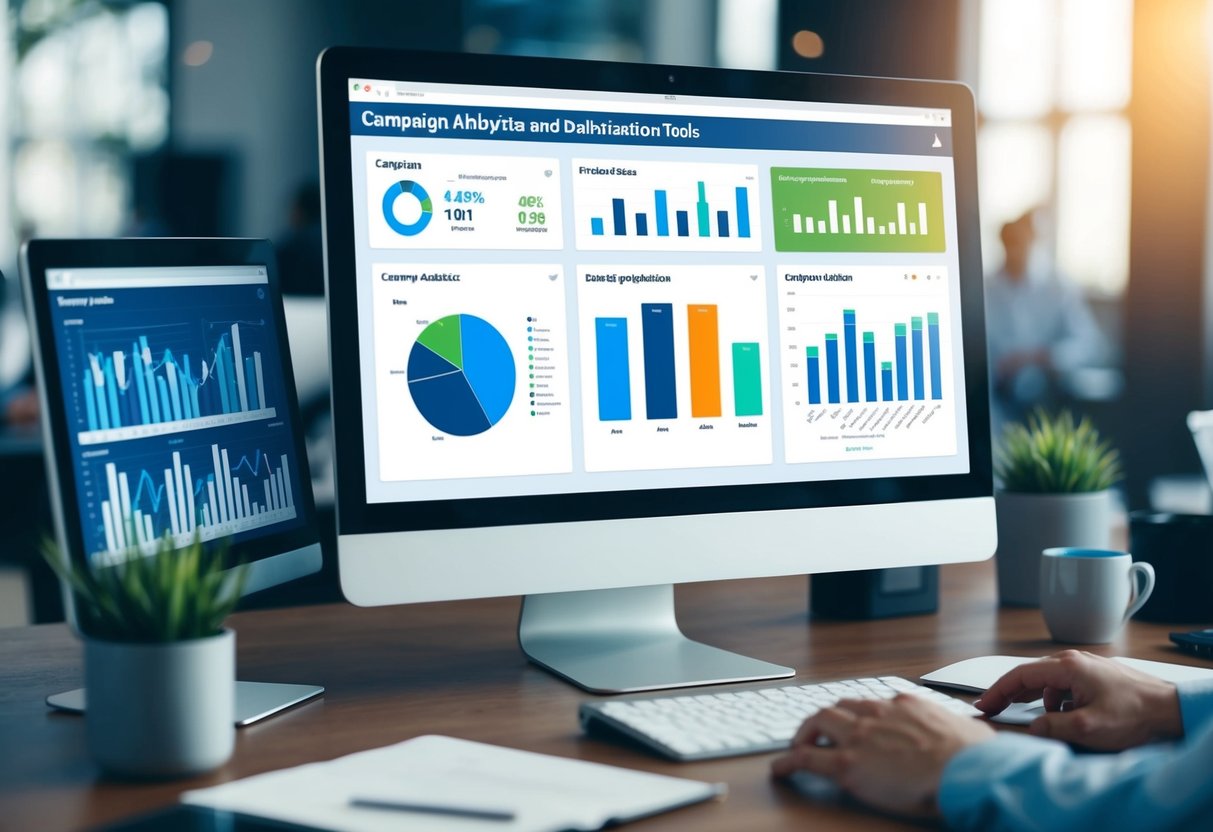
In the landscape of affiliate marketing, leveraging the right tools for analyzing and optimizing campaigns is critical for success. We understand the importance of data-driven decision-making and the value of fine-tuning strategies to enhance conversion rates.
Using Google Analytics and Other Analytical Tools
We always emphasize the role of Google Analytics and similar analytical tools in monitoring campaign performance. These platforms provide us with in-depth insights through features like real-time analytics, audience behavior reports, and conversion tracking. Let’s explore how to use these tools effectively:
- Traffic Analysis: By examining which sources bring the most traffic, we can allocate our budget more efficiently.
- Behavior Reports: Understanding what our audience does on our site helps us to tweak our content and calls to action.
- Conversion Tracking: Keeping tabs on conversions tells us which affiliates bring value, allowing for better partnership choices.
To fully utilize these analytics tools, we ensure that goals are clearly defined and tracking codes are properly implemented. Consistent monitoring allows us to make agile adjustments to our campaigns, driving better performance outcomes.
Conversion Optimization Techniques
For conversion optimization, we have a suite of techniques to heighten campaign efficacy:
- A/B Testing: Running different versions of a page to see which performs better helps us refine our user experience.
- User Feedback: Gathering data from user interactions provides insights into obstacles that might hinder conversions.
- Landing Page Enhancement: We craft compelling landing pages with a clear value proposition and call-to-action.
Our conversion optimization efforts revolve around understanding what motivates our audience and removing any barriers to conversion. We employ ongoing testing and feedback loops to ensure our tactics are responsive to user behavior and market trends, leading to an increase in successful outcomes.
Social Media Strategies for Affiliate Marketers

In today’s digital landscape, we understand the importance of harnessing social media to promote affiliate products. Using strategic content management and engaging with influencers can drive considerable traffic and conversions to our affiliate offerings.
Managing Social Media Content
As affiliate marketers, our success on social media largely depends on the quality and consistency of our content. We employ social media management tools like Buffer to schedule posts and analyze performance. We must craft our messages carefully to resonate with our audiences, ensuring every post aligns with our brand’s voice and our affiliate marketing goals.
To manage our social media content effectively, we do the following:
- Create a Content Calendar: We outline important dates, product launches, and promotional events to avoid last-minute rushes and ensure a steady stream of content.
- Analyze Performance Data: Regularly reviewing engagement data helps us refine our strategy and increase the effectiveness of our content.
- Use Visuals: High-quality images and videos are crucial as they’re more likely to be shared, increasing our reach.
- Engage with Followers: Responding to comments and messages builds community and trust, which can lead to higher conversion rates.
Leveraging Influencer Marketing
For amplifying our affiliate products, we turn to influencer marketing as a powerful tool. Collaborating with influencers in our niche helps us tap into their already engaged audience, which can translate to direct sales.
Here’s how we make the most out of influencer marketing:
- Identify the Right Influencers: We select influencers based on alignment with our niche, their audience demographics, and engagement rates.
- Build Relationships: Once we’ve identified potential influencers, we work on building genuine partnerships, which could be mutually beneficial.
- Track Campaigns: We monitor the performance of influencer campaigns to gauge their effectiveness and adjust our strategies accordingly.
- Compliance and Transparency: It’s important for influencers to disclose the affiliate relationship to maintain trust with their audience.
By focusing on these areas within social media, we enhance our affiliate marketing efforts, making the best use of the platforms to achieve our business objectives.
Enhancing Productivity and Collaboration

Affiliate marketing thrives on efficiency and teamwork. We understand that employing the right tools can greatly enhance how we manage tasks and collaborate.
Project Management and Workflow Automation
Tools for Affiliate Marketers: In our arsenal, we have powerful tools designed to streamline our affiliate marketing efforts. Trello, a project management tool, allows us to organize our campaigns with boards, lists, and cards. This visual platform helps us keep track of where each project is in the pipeline, ensuring nothing falls through the cracks.
Zapier stands out as a workflow automation tool that connects the apps we use regularly. By creating “Zaps”, we automate repetitive tasks between two or more apps, saving us time and minimizing the potential for error. For instance, new affiliate sign-ups can be automatically added to our CRM, which leads us to another integral tool, HubSpot.
HubSpot excels in customer relationship management. With its detailed analytics and marketing automation features, we can nurture leads effectively and measure the success of our campaigns. This CRM also provides valuable insights into affiliate behaviors and preferences, tailoring our strategies for better results.
By integrating these tools into our workflow, we optimize our productivity and enhance our collaborative efforts. Each tool brings its unique strengths to our operations, creating a cohesive and highly efficient affiliate marketing machine.
Optimizing Affiliate Sales with Web Performance

In the fast-paced world of affiliate marketing, website performance is key to attracting and retaining visitors who may convert into sales. We must ensure that our site can handle high traffic and that it’s optimized for search engines to find us easily.
Web Hosting for High Traffic Sites
When we’re anticipating high traffic, selecting the right web host is crucial. A provider like SiteGround is often recommended for affiliate marketers because it offers solutions that cater to the needs of a high-traffic website. They provide scalable hosting plans that can handle traffic spikes without any downtime, which is essential for maintaining the trust and satisfaction of our visitors.
Here’s why robust web hosting matters for us:
- Uptime Guarantees: To keep our audience engaged and our affiliate sales high, our website must be accessible around the clock.
- Speed: Fast loading times are critical for keeping potential customers from bouncing off our site.
By investing in a web host that guarantees uptime and offers fast loading speeds, we are setting ourselves up for affiliate marketing success.
Improving Core Web Vitals for SEO
Core Web Vitals are a set of specific factors Google considers important in a webpage’s overall user experience. By optimizing these, we ensure that our affiliate site doesn’t just attract visitors but also holds their attention.
Key Core Web Vitals include:
- Largest Contentful Paint (LCP): Measures loading performance. To provide a good user experience, LCP should occur within 2.5 seconds of when the page first starts loading.
- First Input Delay (FID): Measures interactivity. Pages should have an FID of less than 100 milliseconds.
- Cumulative Layout Shift (CLS): Measures visual stability. Pages should maintain a CLS of less than 0.1.
Each of these metrics directly impacts our search rankings. Websites that load quickly and provide a smooth user experience are more likely to retain visitors, potentially increasing our affiliate sales. It’s in our best interest to regularly measure and optimize our website’s core web vitals.
Leveraging Free Design and Writing Tools

In our digital age, the visual appeal of marketing materials is just as crucial as the clarity and impact of the written word. Free design and writing tools have become essential for creating professional-looking content without a hefty price tag.
Graphic Design with Canva and Others
With tools like Canva, we can create eye-catching graphics that resonate with our audience. The intuitive drag-and-drop interface simplifies the design process, allowing us to craft professional-quality images for social media, blogs, and ads. Canva’s vast library of templates, icons, and images provide a solid foundation for any project.
- Key Features:
- Easy-to-use drag-and-drop functionality
- A wide range of templates and design elements
- Customization options for branding
In addition to Canva, other free graphic design tools offer diverse capabilities:
- GIMP: A robust alternative for advanced photo editing
- Fotor: Streamlined for quick photo enhancements and design
By using these tools, we ensure our visual content stands out and captures our target audience’s attention effectively.
Refining Content with Grammarly
Grammarly helps us improve our writing by catching grammatical errors and suggesting stylistic improvements. Beyond basic spell-checking, it provides advanced correction measures that elevate our content’s quality. This AI-driven tool offers real-time insights that make the editing process both efficient and thorough.
- Benefits of Grammarly:
- Real-time grammar and spelling correction
- Style and tone suggestions for various types of content
- Contextual analysis for nuanced language usage
The assistance from tools like Grammarly ensures our content not only looks professional but also reads smoothly and communicates our message clearly. By incorporating these AI content creation tools into our workflow, we enhance the overall impact of our affiliate marketing efforts.
Frequently Asked Questions

We have gathered some key questions to help those beginning in affiliate marketing and those looking for no-cost tools and resources to enhance their promotional efforts. Through these answers, we aim to shed light on starting, finding, and managing affiliate marketing without a financial burden.
What are the top free affiliate marketing tools for beginners?
For beginners, the top free tools include platforms like Afftrack, which offers a versatile tracking system with a 30-day free trial, and various keyword research tools, content creation platforms, and analytics services that provide valuable insights without any cost.
How can beginners get started with affiliate marketing without any investment?
Beginners can start by leveraging free educational resources such as affiliate marketing guides that answer common questions and offer step-by-step advice. It’s crucial to focus on learning the basics, such as choosing the right niche, selecting affiliate programs that resonate with their audience, and creating quality content to drive traffic.
Where can I find free affiliate marketing tools for promoting Amazon products?
Amazon Associates can use Amazon’s own affiliate marketing tools specifically designed for their program. These include banners, widgets, and a link-building tool that can be used to create and track affiliate links for Amazon products.
What are the best affiliate marketing websites that offer free tools and resources?
Websites that stand out include ClickBank, which provides a comprehensive FAQ section for beginners, and the Influencer Marketing Hub, which offers an extensive list of free tools and educational materials to aid affiliate marketers at any level.
How can I track my affiliate marketing performance without spending money?
To track performance effectively, you can use free analytics tools provided by affiliate programs or take advantage of platforms that offer a free version of their tracking software. Tools like Google Analytics are also invaluable for monitoring traffic, conversions, and understanding user behavior on your site.
Are there any affiliate programs that offer daily payouts without requiring a fee?
Some programs do exist that offer daily payouts without fees, although they may come with specific terms and conditions. It’s important to review each program’s payout schedule and ensure they align with your cash flow needs.


